







Your dishwasher cleans your dishes every day, but when did you last clean the dishwasher itself? Most people never think about it until something goes wrong — cloudy glasses, a lingering smell, or dishes that come out less than sparkling. The truth is that dishwashers need regular cleaning to perform at their best, and the filter is the place to start.
Why Dishwasher Cleaning Matters
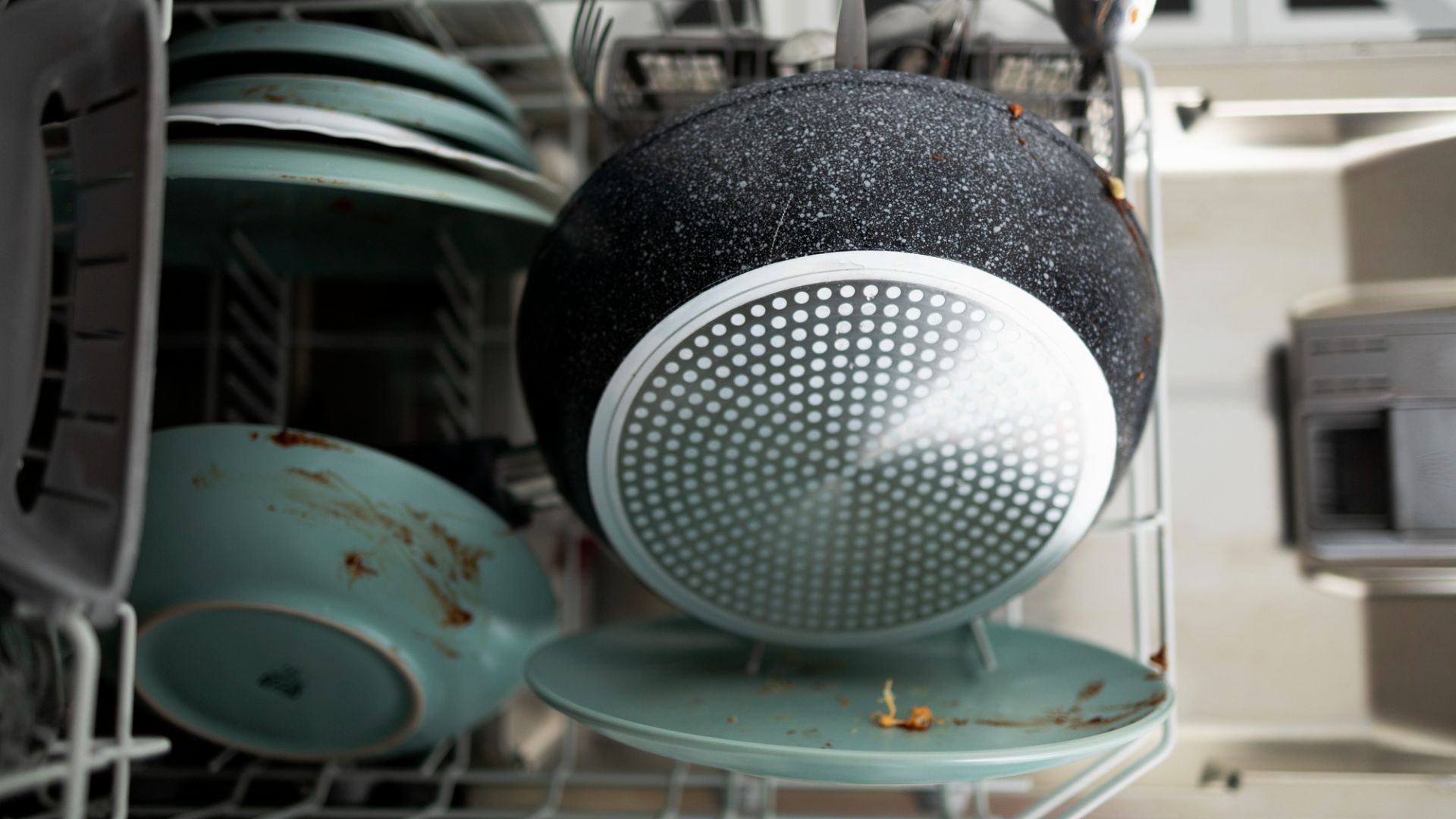
A dirty dishwasher is less effective and less hygienic than a clean one. Here is what happens when maintenance is neglected:
- Food debris accumulates in the filter and on the spray arms, reducing cleaning performance.
- Grease and limescale build up on the interior walls, door seal, and heating element.
- Unpleasant odours develop from trapped food particles and stagnant water.
- Spray arm holes become blocked, meaning water cannot reach all areas of the drum effectively.
- The machine works harder than it needs to, potentially shortening its lifespan.
A clean dishwasher is also more energy-efficient, which is good for your energy bills and the environment. If you would rather have a professional handle the deep cleaning of your kitchen appliances, our home cleaning service in Cambridge can help.
What You Will Need
- White vinegar
- Bicarbonate of soda
- Washing-up liquid
- A soft brush or old toothbrush
- Microfibre cloths
- A toothpick or cocktail stick (for spray arm holes)
Step 1: Locating and Removing the Filter
The filter is usually located at the bottom of the dishwasher, beneath the lower spray arm. Most modern dishwashers have a cylindrical filter that twists out, sometimes accompanied by a flat mesh filter underneath.
- Remove the lower rack to access the base of the dishwasher.
- Twist the cylindrical filter anticlockwise and lift it out.
- Remove the flat mesh filter if present — it usually lifts straight out.
- Check your dishwasher’s manual if you are unsure how to remove the filter for your specific model.
Step 2: Cleaning the Filter
The filter is where most of the food debris collects, so it often needs a thorough clean.
- Rinse the filter under warm running water to remove loose debris.
- Use a soft brush or old toothbrush with a little washing-up liquid to scrub away grease and food particles.
- Pay attention to the mesh — food can become trapped in the fine holes and is best removed with a gentle brush rather than a cloth.
- Rinse thoroughly until the water runs clear.
- Do not use abrasive scourers or harsh chemicals on the filter, as these can damage the mesh.
Once clean, set the filter aside to dry whilst you clean the rest of the machine.
Step 3: Cleaning the Spray Arms
The spray arms distribute water throughout the drum during a wash cycle. If the holes become blocked with limescale or food debris, your dishwasher will not clean effectively.
- Remove the spray arms — most twist or clip off easily. Check your manual if needed.
- Hold each arm under running water and check that water flows freely through all the holes.
- Use a toothpick or cocktail stick to clear any blocked holes.
- Soak in warm soapy water for 10 to 15 minutes if they are particularly grimy.
- Rinse well and reattach securely before running the machine.
Step 4: Cleaning the Door Seal
The rubber seal around the dishwasher door is a common spot for mould, mildew, and food residue to accumulate — and it is often overlooked.
- Wipe along the seal with a damp microfibre cloth to remove loose debris.
- For mould or stubborn grime, use an old toothbrush dipped in a solution of warm water and bicarbonate of soda.
- Pay particular attention to the folds and creases in the rubber where residue tends to hide.
- Wipe clean with a damp cloth and dry thoroughly.
Step 5: Cleaning the Interior Walls and Base
Wipe down the interior walls, door, and base of the dishwasher with a damp cloth to remove any visible grease or residue. Pay attention to the area around the filter housing and the base of the door, where water and debris can pool.
Step 6: Running a Hot Cleaning Cycle
Once you have cleaned the filter, spray arms, and door seal, it is time to run a cleaning cycle to flush out the interior and tackle limescale and grease build-up.
Vinegar method:
- Place a dishwasher-safe bowl or cup filled with 250ml of white vinegar on the top rack.
- Run the dishwasher on the hottest cycle available (usually 65°C or higher).
- The vinegar will help dissolve limescale and grease throughout the machine.
Bicarbonate of soda method:
- After the vinegar cycle, sprinkle a cup of bicarbonate of soda across the base of the empty dishwasher.
- Run a short hot cycle.
- This deodorises the machine and helps remove any remaining staining.
Do not use vinegar and bicarbonate of soda in the same cycle — they neutralise each other. Run them separately for best results.
Commercial dishwasher cleaner:
Proprietary dishwasher cleaning tablets or liquids (such as Finish Dishwasher Cleaner) are a convenient alternative and are formulated to tackle grease, limescale, and odours in one cycle. Use monthly for best results.
Maintenance Schedule
Keeping your dishwasher clean does not require a huge time investment — just a consistent routine.
- Weekly: Check and rinse the filter. Wipe down the door seal.
- Monthly: Remove and thoroughly clean the filter and spray arms. Run a hot cleaning cycle with vinegar or a commercial cleaner.
- Every 3 months: Run a bicarbonate of soda cycle to deodorise. Check the spray arm holes for blockages.
- Annually: Check the door seal for cracks or deterioration. Inspect the interior for limescale build-up and treat if necessary.
Tips for Keeping Your Dishwasher Cleaner for Longer
- Scrape plates before loading — you do not need to rinse them, but removing large food scraps reduces filter clogging.
- Use a quality dishwasher tablet and rinse aid for best results.
- Leave the door slightly ajar after a cycle to allow the interior to dry and air out, reducing odour and mould growth.
- Use a dishwasher salt if you live in a hard water area — this protects the machine from limescale damage.
Final Thoughts
A clean dishwasher is a more effective, more hygienic, and longer-lasting dishwasher. The filter is the heart of the machine, and keeping it clean is the single most important maintenance task you can do. Combine that with regular spray arm checks, door seal cleaning, and a monthly hot cycle, and your dishwasher will reward you with sparkling results every time. And if you want your whole kitchen kept in top condition, our home cleaning team in Cambridge is always on hand to help.