






Your fridge works hard every single day, keeping your food fresh and your household running smoothly. Yet it is one of the most overlooked appliances when it comes to regular cleaning. A dirty fridge is not just unpleasant — it can harbour bacteria, cause cross-contamination, and even shorten the lifespan of your appliance. Learning how to clean a fridge properly inside and out is a simple skill that pays dividends in food safety and hygiene.
Why Regular Fridge Cleaning Matters
Most people give their fridge a quick wipe when something spills, but a thorough clean is a different matter entirely. Here is why it should be on your regular cleaning schedule:
- Food safety: Bacteria such as Listeria and Salmonella can survive and multiply in a fridge, especially in spills and residue.
- Odour control: Old food, forgotten leftovers, and spills create unpleasant odours that can transfer to other foods.
- Energy efficiency: A clean fridge with good door seals runs more efficiently, saving you money on energy bills.
- Longer appliance life: Dirt and grime around seals and vents can cause your fridge to work harder than it needs to.
If you would rather leave the deep cleaning to the professionals, our home cleaning services in Cambridge team can handle it as part of a thorough household clean.
What You Will Need
- Warm water and washing-up liquid
- White vinegar or bicarbonate of soda
- Microfibre cloths or soft sponges
- An old toothbrush (for seals and crevices)
- A cooler bag or box for food storage during cleaning
- Baking soda (for deodorising)
Step 1: Empty and Defrost the Fridge
Before you can clean properly, you need to empty everything out. This is also a good opportunity to check expiry dates and dispose of anything past its best.
- Transfer perishables to a cooler bag with ice packs.
- Remove all shelves, drawers, and removable compartments.
- If your fridge has a freezer compartment with ice build-up, switch it off and allow it to defrost fully before cleaning. Place towels at the base to catch meltwater.
Never use a sharp implement to chip away ice — this can damage the interior lining and refrigerant pipes.
Step 2: Cleaning the Shelves and Drawers
Glass shelves and plastic drawers should be washed separately in the sink. Here is how to do it properly:
- Allow glass shelves to come to room temperature before washing — placing cold glass in hot water can cause it to crack.
- Wash with warm soapy water and a soft sponge.
- For stubborn stains or sticky residue, soak in a solution of warm water and white vinegar for 10–15 minutes.
- Rinse thoroughly and dry completely before replacing.
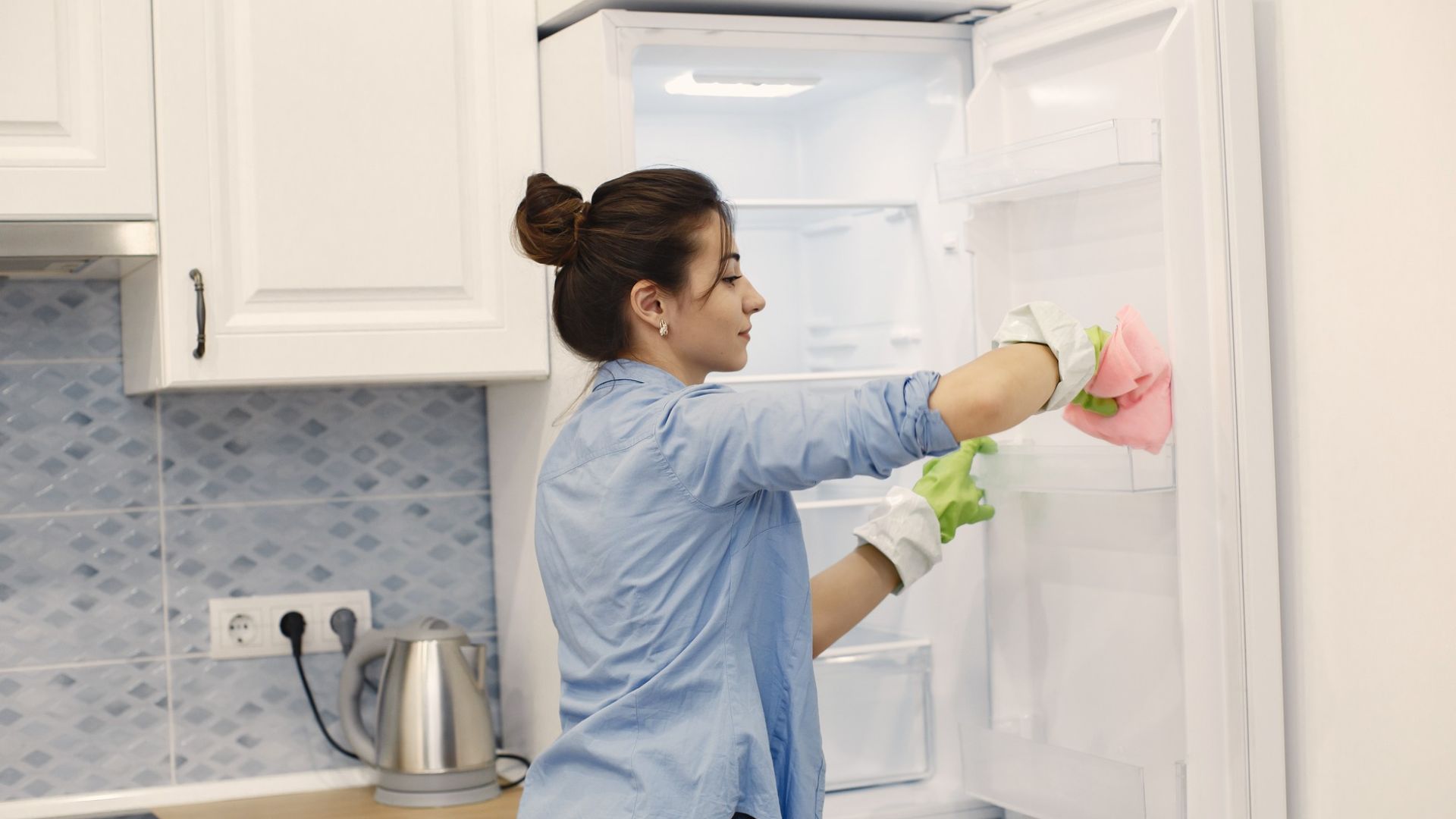
Step 3: Cleaning the Interior
With the shelves removed, you have clear access to the interior walls, base, and ceiling of the fridge.
- Mix a solution of equal parts white vinegar and warm water, or use a mild washing-up liquid solution.
- Wipe down all interior surfaces with a microfibre cloth, working from top to bottom.
- Pay particular attention to corners and the base, where spills tend to pool.
- For dried-on food, dampen the area and leave for a few minutes before wiping away.
- Avoid bleach or harsh chemical cleaners inside the fridge — they can leave residues that contaminate food.
Step 4: Cleaning the Door Seals
The rubber door seals (also called gaskets) are a magnet for mould, mildew, and grime. They are also critical to your fridge running efficiently — a damaged or dirty seal allows cold air to escape.
- Use an old toothbrush dipped in a bicarbonate of soda and water paste to scrub along the folds of the seal.
- Wipe clean with a damp cloth.
- Check for any cracks or tears — if the seal is damaged, it may need replacing.
Step 5: Cleaning the Exterior
The outside of your fridge collects fingerprints, grease splashes, and dust — particularly on the top and around the handle.
- Stainless steel fridges: Use a specialist stainless steel cleaner or a cloth dampened with white vinegar, wiping in the direction of the grain to avoid streaks.
- White or coloured fridges: A warm soapy cloth works well. Rinse and dry to prevent watermarks.
- Top of the fridge: Often neglected, this area collects dust and grease. Wipe down with a damp cloth and dry thoroughly.
- Underneath: Pull the fridge out periodically to vacuum dust from the condenser coils at the back — this improves efficiency significantly.
Deodorising with Baking Soda
Even after a thorough clean, fridges can retain a faint odour. Baking soda (bicarbonate of soda) is a natural and effective deodoriser.
- Place an open box or small bowl of baking soda on a shelf at the back of the fridge.
- Replace it every one to three months.
- Alternatively, a small bowl of ground coffee or a few drops of vanilla extract on a cotton wool ball can help neutralise odours.
Avoid storing strong-smelling foods (such as onions or certain cheeses) uncovered — always use airtight containers.
How Often Should You Clean Your Fridge?
A good cleaning schedule keeps things manageable and prevents build-up:
- Weekly: Wipe down shelves and check for expired items.
- Monthly: Clean the interior thoroughly, including drawers and door seals.
- Every 3–6 months: Pull the fridge out and clean behind and underneath it.
- Immediately: Clean up any spills as soon as they happen to prevent bacteria growth and staining.
Final Tips for a Cleaner Fridge
- Store raw meat on the bottom shelf in sealed containers to prevent drips contaminating other food.
- Use fridge liners on shelves to make future cleaning easier.
- Label leftovers with dates so nothing gets forgotten at the back.
- Keep your fridge at or below 5°C for optimal food safety.
A clean fridge is a cornerstone of a hygienic kitchen. With a consistent routine and the right approach, it need not be a dreaded chore. And if you want a helping hand keeping your whole home in order, our home cleaning service in Cambridge is here to help.