





Fabric sofas are comfortable, stylish, and — let’s be honest — magnets for spills, crumbs, pet hair, and general everyday grime. The good news is that you don’t need a professional machine or expensive equipment to get yours looking fresh again. With a few household staples and a bit of patience, you can clean a fabric sofa at home without a machine. Here’s how.
Step 1: Check the Care Label
Before you reach for any cleaning product, check the care label on your sofa. It’s usually found underneath a cushion or on the base of the frame. The label will include a cleaning code:
- W — Water-based cleaners are safe to use
- S — Solvent-based cleaners only (no water)
- W/S — Either water or solvent-based cleaners are fine
- X — Vacuum only; no liquid cleaners
Using the wrong type of cleaner can cause permanent damage — shrinking, watermarking, or colour bleeding. If your sofa is coded S or X, it’s best to consult a professional rather than risk it.
Step 2: Vacuum Thoroughly First
Before applying any liquid, vacuum the entire sofa — including under and between cushions. Use the upholstery attachment and go over every surface, paying attention to seams and crevices where crumbs and debris collect.
This step matters more than people realise. Applying liquid to a dusty or debris-covered sofa can push dirt deeper into the fabric and make stains worse. A thorough vacuum first gives you a clean base to work from.
Step 3: Spot Clean Stains
For individual stains, act quickly — the sooner you treat a stain, the easier it is to remove.
General Spot Cleaning Method (for W or W/S coded sofas):
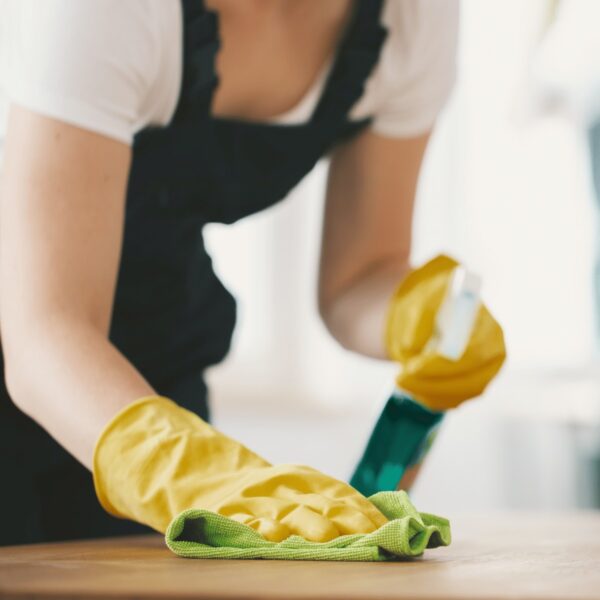
- Mix a small amount of washing-up liquid with warm water to create a mild soapy solution
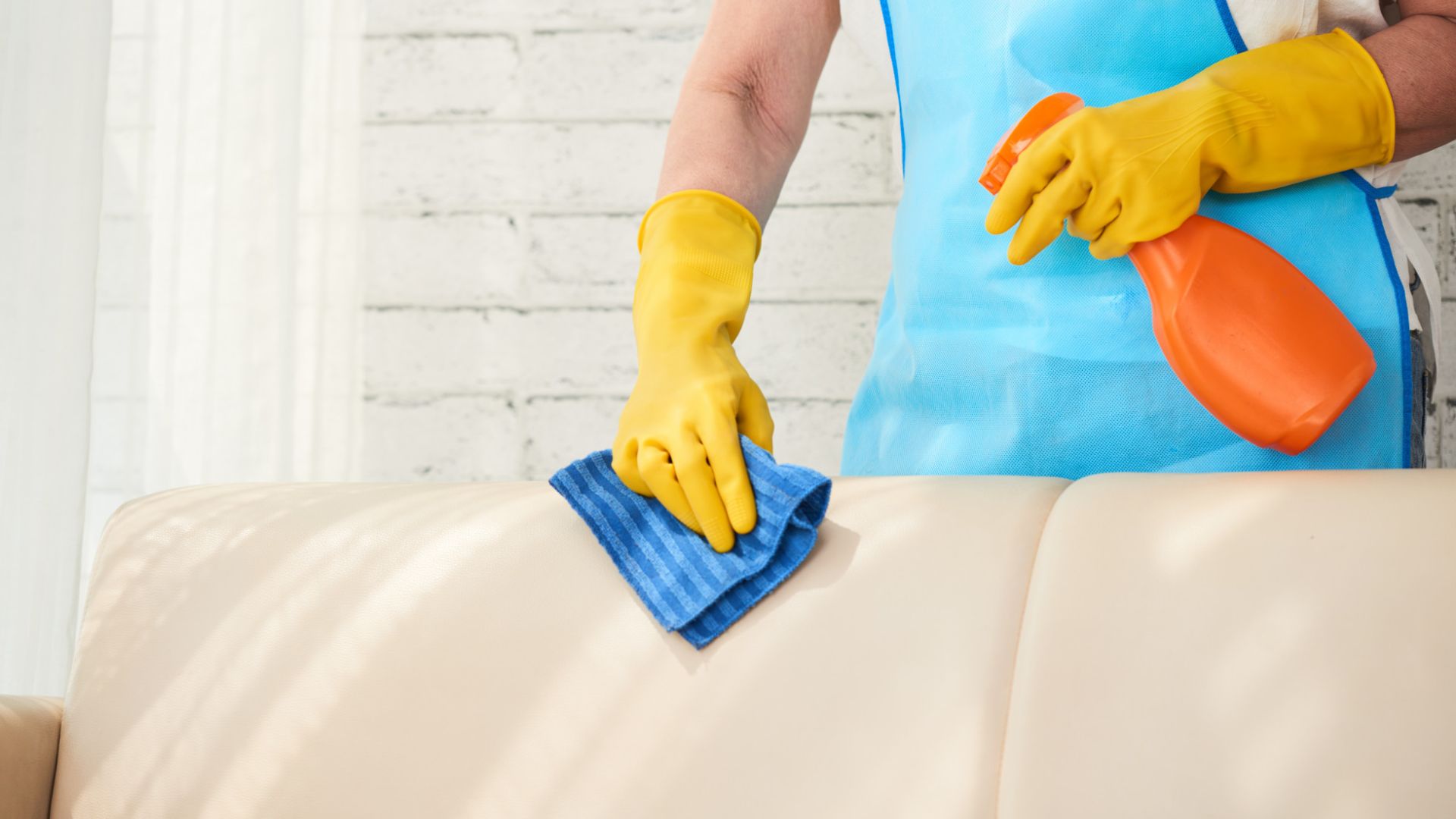
- Dampen a clean white cloth with the solution — don’t soak it
- Blot the stain gently, working from the outside in to avoid spreading it
- Don’t rub — rubbing pushes the stain deeper and can damage the fabric fibres
- Rinse by blotting with a clean damp cloth (water only)
- Blot dry with a dry cloth and allow to air dry fully
For Tougher Stains:
- Grease or oil: Sprinkle bicarbonate of soda on the stain, leave for 15 minutes to absorb the grease, then vacuum off before spot cleaning
- Red wine: Blot immediately, then apply a mixture of washing-up liquid and cold water. Avoid hot water — it sets the stain
- Ink: Dab with rubbing alcohol on a cotton wool ball, blotting gently
Step 4: Deodorise with Bicarbonate of Soda
Even if your sofa doesn’t look dirty, it can absorb odours over time — from pets, cooking, sweat, and general use. Bicarbonate of soda is a natural deodoriser that’s safe for most fabric types.
- Sprinkle a generous layer of bicarbonate of soda over the entire sofa surface
- Leave for at least 20 minutes — ideally a few hours or overnight for strong odours
- Vacuum thoroughly to remove all the powder
This won’t remove stains, but it will neutralise smells effectively and leave the fabric feeling fresher.
Step 5: Drying Tips
Moisture left in fabric can lead to mould and mildew, so drying properly is just as important as cleaning.
- Open windows and doors to improve air circulation
- Use a fan directed at the sofa to speed up drying
- Avoid sitting on the sofa until it’s completely dry — usually 2–4 hours depending on how much liquid was used
- Don’t use a hairdryer on high heat — it can shrink or damage fabric
What to Avoid
A few common mistakes that can make things worse:
- Over-wetting the fabric — too much liquid can cause watermarks and encourage mould
- Using coloured cloths — dye can transfer onto light-coloured fabric; always use white cloths
- Scrubbing aggressively — this damages fabric fibres and spreads stains
- Using bleach — unless specifically recommended for your fabric type, bleach will cause discolouration
- Ignoring the care label — always check before applying anything
When to Call in the Professionals
DIY cleaning works well for light soiling and fresh stains, but there are times when professional help is the better option:
- Deep-set stains that haven’t responded to home treatment
- Heavily soiled sofas that need a full refresh
- Delicate or expensive fabrics where the risk of damage is too high
- Sofas coded S or X that require specialist products
AKTE’s home cleaning services includes upholstery cleaning as part of a thorough home clean, and our specialised cleaning team can tackle more intensive fabric restoration work — including steam cleaning and specialist stain treatment — that goes beyond what home methods can achieve.
Final Thoughts
Cleaning a fabric sofa at home without a machine is entirely achievable with the right approach. Check the care label, vacuum first, spot clean with care, deodorise with bicarbonate of soda, and dry thoroughly. Regular light maintenance — a quick vacuum and deodorise every few weeks — will keep your sofa in good condition between deeper cleans and extend its life considerably.