





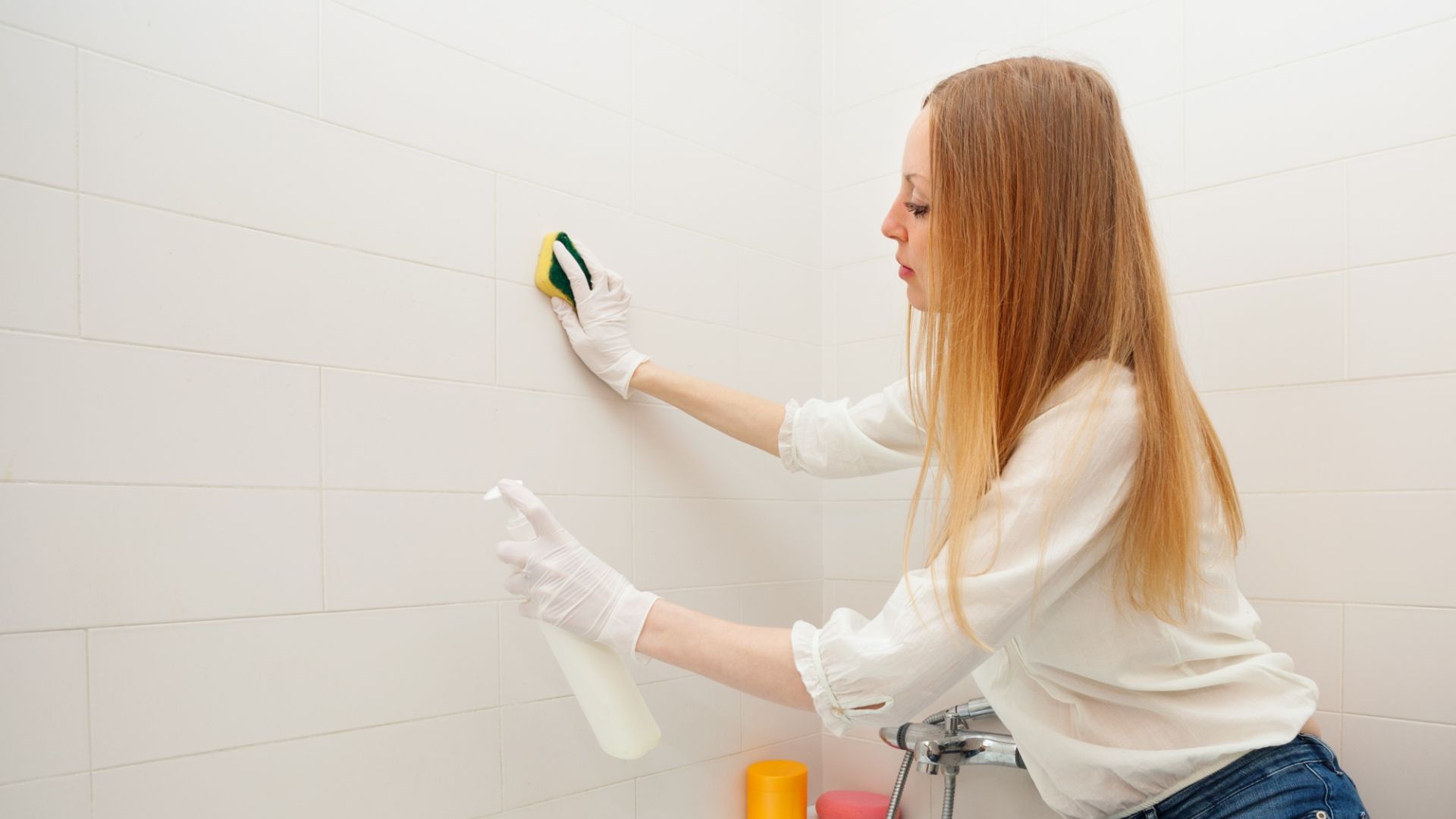
If you’ve ever noticed a white, chalky crust building up on your bathroom tiles, you’re dealing with limescale. It’s one of the most common bathroom cleaning challenges in the UK, particularly in hard water areas. The good news is that with the right approach, it’s entirely removable — and preventable. Here’s how to remove limescale from bathroom tiles effectively.
What Is Limescale?
Limescale is a hard, off-white deposit made primarily of calcium carbonate. It forms when hard water — water with a high mineral content — evaporates and leaves those minerals behind on surfaces.
In the UK, around 60% of homes are in hard water areas, particularly in the South East, East Anglia, and the Midlands. If you’re in one of these regions, limescale on tiles, taps, and shower screens is almost inevitable without regular maintenance.
Limescale isn’t just unsightly — over time it can:
- Stain grout permanently if left untreated
- Harbour bacteria in its porous surface
- Damage tile glazing if abrasive cleaners are used incorrectly
- Block showerheads and reduce water pressure
The White Vinegar Method
White vinegar is mildly acidic, which makes it excellent at dissolving calcium carbonate deposits. It’s also cheap, widely available, and safe for most tile types.
What you’ll need:
- White vinegar (undiluted for heavy build-up, diluted 50/50 with water for light deposits)
- A spray bottle
- An old toothbrush or stiff-bristled brush
- A microfibre cloth
Method:
- Spray the affected tiles generously with white vinegar
- Leave to soak for 15–30 minutes (longer for heavy build-up)
- Scrub with the toothbrush, paying attention to grout lines and corners
- Rinse thoroughly with clean water
- Buff dry with a microfibre cloth to prevent new deposits forming
Note: Avoid using vinegar on natural stone tiles such as marble, travertine, or limestone — the acid can etch and damage the surface. Use a pH-neutral cleaner instead.
Commercial Descalers
For stubborn or long-standing limescale, a dedicated commercial descaler will often be more effective than vinegar. Products like HG Calcium, Lime & Rust Remover or Viakal are formulated specifically for this purpose.
Tips for using commercial descalers:
- Always read the label — some products are not suitable for certain tile types or finishes
- Wear rubber gloves and ensure the room is well ventilated
- Apply directly to the affected area and leave for the recommended dwell time
- Don’t mix with bleach or other cleaning products
- Rinse thoroughly after use
For very thick deposits, you may need to apply the product, scrub, rinse, and repeat the process two or three times.
Caring for Grout
Grout is porous and absorbs limescale, soap scum, and mould more readily than the tile surface itself. Once grout becomes stained, it’s harder to restore.
For limescale on grout:
- Apply a paste of bicarbonate of soda and white vinegar directly to the grout lines
- Leave for 10–15 minutes, then scrub with a stiff brush
- Rinse well and dry
If grout is heavily stained or crumbling, it may need to be re-grouted rather than cleaned. A professional can assess whether cleaning or replacement is the better option.
Prevention Tips
The easiest way to deal with limescale is to stop it building up in the first place. A few simple habits make a big difference:
- Squeegee tiles after every shower — removing water before it evaporates prevents mineral deposits forming
- Dry tiles with a cloth after cleaning to avoid water spots
- Use a daily shower spray — these products are designed to be sprayed on after showering and left to work, preventing build-up between cleans
- Clean tiles weekly — regular light cleaning is far easier than tackling months of accumulated limescale
- Consider a water softener — if you’re in a very hard water area, a whole-house water softener can dramatically reduce limescale across all your appliances and surfaces
When to Call Professionals
Sometimes limescale has been left so long that DIY methods simply aren’t enough. If your tiles are heavily stained, your grout is discoloured throughout, or you’re concerned about damaging delicate tile finishes, it’s worth calling in the professionals.
AKTE’s home cleaning service covers thorough bathroom cleans, and our specialised cleaning team can tackle more intensive descaling and restoration work — including grout cleaning and tile treatment — that goes beyond what regular cleaning can achieve.
Quick Reference: Limescale Removal by Severity
- Light deposits (recent): Daily shower spray or diluted white vinegar
- Moderate build-up (weeks old): Undiluted white vinegar, 30-minute soak
- Heavy deposits (months old): Commercial descaler, may need multiple applications
- Severe or widespread: Professional cleaning recommended
Final Thoughts
Limescale on bathroom tiles is a fact of life in much of the UK, but it doesn’t have to be a permanent fixture. With the right products and a bit of regular maintenance, you can keep your tiles looking clean and bright year-round. Start with white vinegar for everyday build-up, step up to a commercial descaler when needed, and don’t forget to protect your grout.
If the job feels bigger than a DIY fix, AKTE’s cleaning team is always on hand to help restore your bathroom to its best.